

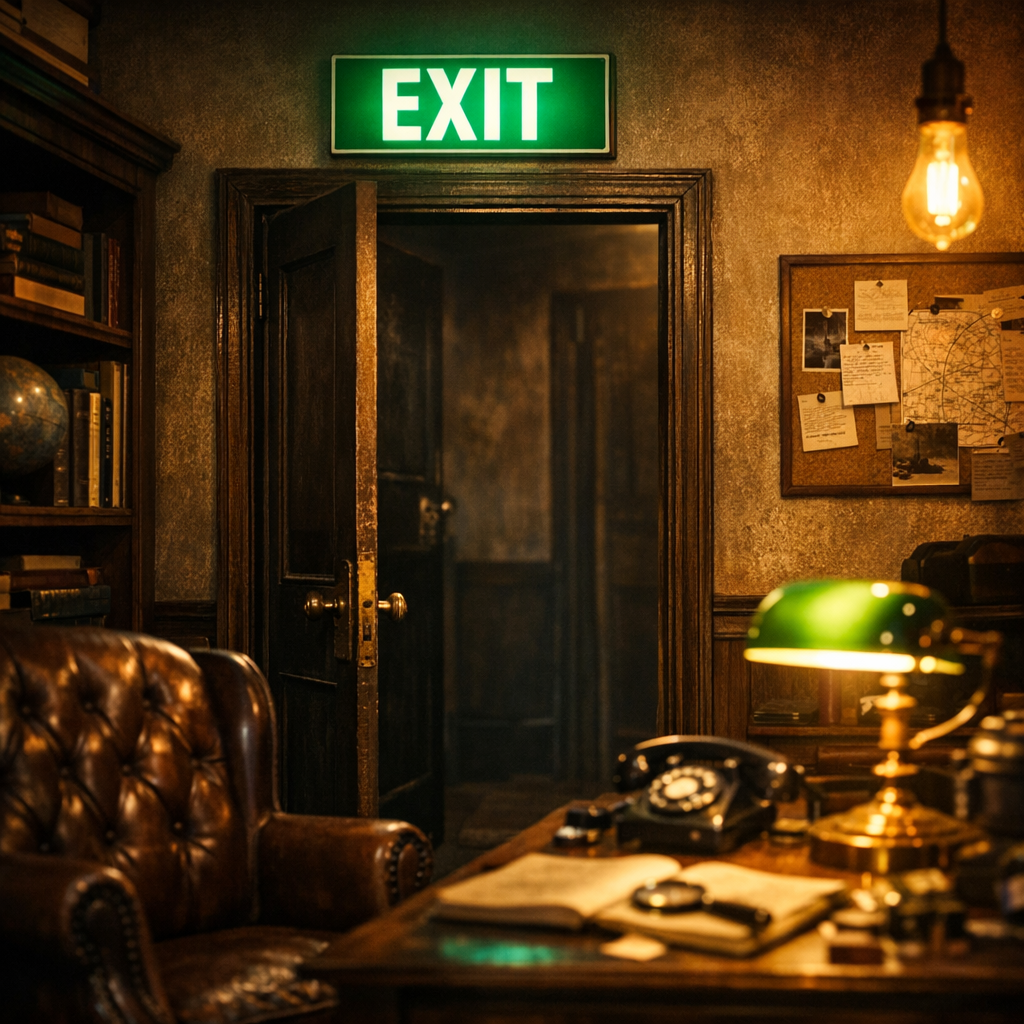
Short answer: no, you’re not actually locked in. Fire codes in California (and almost every US state) require all rooms to have at least one door that opens from the inside without a key, button, or solved puzzle. Game masters watch you on camera and can let you out within seconds. The “lock” is the theme of the game — the actual door safety is non-negotiable. If you ever feel anxious, claustrophobic, or just need to step out, you can leave any time. We hear this question every week from first-timers, so here’s the honest, detailed answer.
The Fire Code Reality (California & Most US States)
This is the foundational truth most first-timers don’t realize: legally licensed escape rooms in California cannot lock you in. Specifically:
- California Fire Code (CFC) Section 1010 requires egress doors to be “operable from the inside without the use of a key or special knowledge or effort.”
- Single-action egress: one motion (push, pull, turn) opens the door — no codes, no buttons, no game-clearing required.
- Maximum occupancy and exit width rules apply just like any commercial venue.
- Cities issue Certificates of Occupancy verifying compliance before the operator can open.
An operator that actually locks you in would lose their certificate, get shut down by the fire marshal, and face liability that ends the business. It doesn’t happen at legitimate venues.
The “Lock” Is the Theme, Not a Lock
The narrative of the game is that you’re trapped. The mechanical reality is that you have a clearly visible exit at all times.
Three common configurations:
1. Free egress door (most common in OC)
The room has a normal door that opens with a regular handle. The “lock” you’re trying to crack is on a separate prop door, a chest, a final puzzle box — not the actual exit. You can walk out the egress door at any time during the game.
2. Push-bar emergency exit
Similar, but the egress door has a panic bar (the horizontal “press to open” hardware seen in commercial buildings). Pushing it opens the door instantly. Required in some larger venues.
3. Magnetic lock with manual release
A few high-immersion rooms use magnetic locks that are released by the GM remotely. Even these are required to fail-safe (auto-open in a power outage) and have a manual release inside the room — usually a clearly labeled emergency button or pull cord.
You’re never in a room where the only way out is to solve a puzzle. Always.
How Game Masters Watch You
Every legitimate escape room has cameras and audio:
- Cameras in every room — the GM watches your team continuously, partly to deliver hints, partly for safety.
- Audio (microphone) — they hear you. If you say “we need help” or “I want to stop,” they respond immediately.
- Two-way speaker — they can talk to you any time.
- Door buzzer or radio — you can call them to come open the door if needed.
Response time is typically 5–30 seconds. If you say “I need to step out,” the GM is at your door in under a minute, often immediately.
Emergency Exits and Panic Buttons
Most rooms have at least one of:
- Marked emergency exit — usually the same door you came in through, sometimes a separate marked exit.
- Panic button or emergency stop — a clearly labeled button that pauses the game, opens the door, and signals the GM.
- Phone or intercom in the room — direct line to the front desk or GM.
Operators are required to brief you on emergency procedures before the game starts. If your operator doesn’t show you the emergency exit during the briefing, that’s a yellow flag.
When Game Masters Pause or Open the Room
Reasons GMs will instantly pause and open the door:
- Anyone says “I want to stop” or “I want to leave”
- Bathroom break needed
- Medical concern (panic attack, dizziness, allergic reaction, anything)
- Phone emergency (you can hand your phone to the GM at booking and ask them to interrupt for specific calls)
- External emergency (fire alarm, weather alert, building issue)
- Equipment malfunction (puzzle prop fails — they’ll come fix or compensate)
None of this counts against your time on the clock at most operators. We pause the timer for any of these.
Anxiety, Claustrophobia, “Need to Pee”
Three of the most common reasons people ask “can I leave?”:
Anxiety / panic attack
Tell the GM via the in-room camera or speaker. They open the door immediately. No questions, no judgment, no stigma. We see this 1–2 times a month and handle it the same way every time. We have a separate guide on escape rooms and claustrophobia.
Bathroom break
Just ask. GM pauses the clock, opens the door, you go to the front-desk bathroom, return, GM closes the door, clock resumes. Takes 3–5 minutes. We’ve never refused this.
Just need air
Same — say so, GM opens the door. You step into the lobby for a minute, then return. We’ve had teams take a 2-minute breather and come back to escape with time to spare.
Medical Concerns During the Game
If anyone in the room feels dizzy, has chest pain, has a panic attack, or experiences any medical issue:
- Tell the GM immediately — speak loudly toward the camera, the GM hears you.
- GM opens the door within seconds — almost always under 30 seconds, usually faster.
- GM provides water, a chair, fresh air — most operators have a “calm down” area in the lobby.
- Call 911 if needed — operators are trained to escalate. Most have a basic first aid kit.
This isn’t theoretical. We’ve had this exact scenario play out a handful of times in 7 years. Everyone was fine, the protocol worked.
What If You Just Want to Leave Mid-Game?
You absolutely can. There’s no commitment to finish.
The most common version: someone in a 4-person team realizes they’re not having fun (too anxious, not their thing). They tell the GM, GM opens the door, that person waits in the lobby, the rest of the team continues. Refunds vary by operator — most won’t refund the leaver since the slot is non-recoverable, but the team can finish without them.
Alternative: the WHOLE team wants to stop. GM opens, escorts you out, debriefs. Refund policy varies. Some operators will give credit toward another visit. Most are humans about it.
Are All Operators Actually Compliant?
Honest answer: most are, some aren’t.
What to look for at a legitimate operator:
- Visible business license at the front desk
- Clear briefing covering emergency exits before the game
- Visible “EXIT” signage inside the room (some have backlit signs that stay on during gameplay)
- Cameras and audio you can see/notice
- Real address, real phone number, real reviews
What to avoid:
- Pop-up rooms with no permanent location
- Operators who can’t tell you their fire-code compliance details
- “Ultra-realistic” rooms claiming to actually trap you (this is illegal at any commercial venue)
- Pop-up haunted house events that aren’t escape rooms but advertise as such (different rules)
If you have any doubt, call the operator before booking and ask: “Is the egress door key-free from inside? What’s the emergency exit briefing process?” Legitimate operators answer this confidently.
What We Do at Infinity Escape
- Egress door is unlocked from the inside at all times during gameplay. Single-handle operation.
- Backlit “EXIT” sign visible during play (yes, we’ve themed them to fit the rooms).
- Cameras + audio in every room, monitored continuously.
- Emergency briefing before every game — GM walks you through the exit, the panic-stop, the bathroom location.
- Pause the clock for any reason — bathroom, water, anxiety, phone — all free, no time penalty.
- Open the door within 30 seconds if you say “I want out.” We’ve never made anyone wait.
- Fullerton Fire Department certified at our 108 E. Amerige Ave location.
If safety is your concern, you should never feel pressured to play through it. Tell us at booking if you have anxiety or claustrophobia and we’ll proactively show you the exit before the game starts.
Magic Cottage · Zombie Lab · Claustrophobia guide · Contact us before booking
Frequently Asked Questions
Updated April 2026. Fire-code specifics vary by jurisdiction. California Fire Code Section 1010 referenced. Confirm safety practices with each operator at booking.