Latest News and Media

Are You Actually Locked In an Escape Room? (Honest Safety Answer)

Short answer: no, you’re not actually locked in. Fire codes in California (and almost every US state) require all rooms to have at least one door that opens from the inside without a key, button, or solved puzzle. Game masters watch you on camera and can let you out within seconds. The “lock” is the theme of the game — the actual door safety is non-negotiable. If you ever feel anxious, claustrophobic, or just need to step out, you can leave any time. We hear this question every week from first-timers, so here’s the honest, detailed answer.

The Fire Code Reality (California & Most US States)

This is the foundational truth most first-timers don’t realize: legally licensed escape rooms in California cannot lock you in. Specifically:

  • California Fire Code (CFC) Section 1010 requires egress doors to be “operable from the inside without the use of a key or special knowledge or effort.”
  • Single-action egress: one motion (push, pull, turn) opens the door — no codes, no buttons, no game-clearing required.
  • Maximum occupancy and exit width rules apply just like any commercial venue.
  • Cities issue Certificates of Occupancy verifying compliance before the operator can open.

An operator that actually locks you in would lose their certificate, get shut down by the fire marshal, and face liability that ends the business. It doesn’t happen at legitimate venues.

The “Lock” Is the Theme, Not a Lock

The narrative of the game is that you’re trapped. The mechanical reality is that you have a clearly visible exit at all times.

Three common configurations:

1. Free egress door (most common in OC)

The room has a normal door that opens with a regular handle. The “lock” you’re trying to crack is on a separate prop door, a chest, a final puzzle box — not the actual exit. You can walk out the egress door at any time during the game.

2. Push-bar emergency exit

Similar, but the egress door has a panic bar (the horizontal “press to open” hardware seen in commercial buildings). Pushing it opens the door instantly. Required in some larger venues.

3. Magnetic lock with manual release

A few high-immersion rooms use magnetic locks that are released by the GM remotely. Even these are required to fail-safe (auto-open in a power outage) and have a manual release inside the room — usually a clearly labeled emergency button or pull cord.

You’re never in a room where the only way out is to solve a puzzle. Always.

How Game Masters Watch You

Every legitimate escape room has cameras and audio:

  • Cameras in every room — the GM watches your team continuously, partly to deliver hints, partly for safety.
  • Audio (microphone) — they hear you. If you say “we need help” or “I want to stop,” they respond immediately.
  • Two-way speaker — they can talk to you any time.
  • Door buzzer or radio — you can call them to come open the door if needed.

Response time is typically 5–30 seconds. If you say “I need to step out,” the GM is at your door in under a minute, often immediately.

Emergency Exits and Panic Buttons

Most rooms have at least one of:

  • Marked emergency exit — usually the same door you came in through, sometimes a separate marked exit.
  • Panic button or emergency stop — a clearly labeled button that pauses the game, opens the door, and signals the GM.
  • Phone or intercom in the room — direct line to the front desk or GM.

Operators are required to brief you on emergency procedures before the game starts. If your operator doesn’t show you the emergency exit during the briefing, that’s a yellow flag.

When Game Masters Pause or Open the Room

Reasons GMs will instantly pause and open the door:

  • Anyone says “I want to stop” or “I want to leave”
  • Bathroom break needed
  • Medical concern (panic attack, dizziness, allergic reaction, anything)
  • Phone emergency (you can hand your phone to the GM at booking and ask them to interrupt for specific calls)
  • External emergency (fire alarm, weather alert, building issue)
  • Equipment malfunction (puzzle prop fails — they’ll come fix or compensate)

None of this counts against your time on the clock at most operators. We pause the timer for any of these.

Anxiety, Claustrophobia, “Need to Pee”

Three of the most common reasons people ask “can I leave?”:

Anxiety / panic attack

Tell the GM via the in-room camera or speaker. They open the door immediately. No questions, no judgment, no stigma. We see this 1–2 times a month and handle it the same way every time. We have a separate guide on escape rooms and claustrophobia.

Bathroom break

Just ask. GM pauses the clock, opens the door, you go to the front-desk bathroom, return, GM closes the door, clock resumes. Takes 3–5 minutes. We’ve never refused this.

Just need air

Same — say so, GM opens the door. You step into the lobby for a minute, then return. We’ve had teams take a 2-minute breather and come back to escape with time to spare.

Medical Concerns During the Game

If anyone in the room feels dizzy, has chest pain, has a panic attack, or experiences any medical issue:

  1. Tell the GM immediately — speak loudly toward the camera, the GM hears you.
  2. GM opens the door within seconds — almost always under 30 seconds, usually faster.
  3. GM provides water, a chair, fresh air — most operators have a “calm down” area in the lobby.
  4. Call 911 if needed — operators are trained to escalate. Most have a basic first aid kit.

This isn’t theoretical. We’ve had this exact scenario play out a handful of times in 7 years. Everyone was fine, the protocol worked.

What If You Just Want to Leave Mid-Game?

You absolutely can. There’s no commitment to finish.

The most common version: someone in a 4-person team realizes they’re not having fun (too anxious, not their thing). They tell the GM, GM opens the door, that person waits in the lobby, the rest of the team continues. Refunds vary by operator — most won’t refund the leaver since the slot is non-recoverable, but the team can finish without them.

Alternative: the WHOLE team wants to stop. GM opens, escorts you out, debriefs. Refund policy varies. Some operators will give credit toward another visit. Most are humans about it.

Are All Operators Actually Compliant?

Honest answer: most are, some aren’t.

What to look for at a legitimate operator:

  • Visible business license at the front desk
  • Clear briefing covering emergency exits before the game
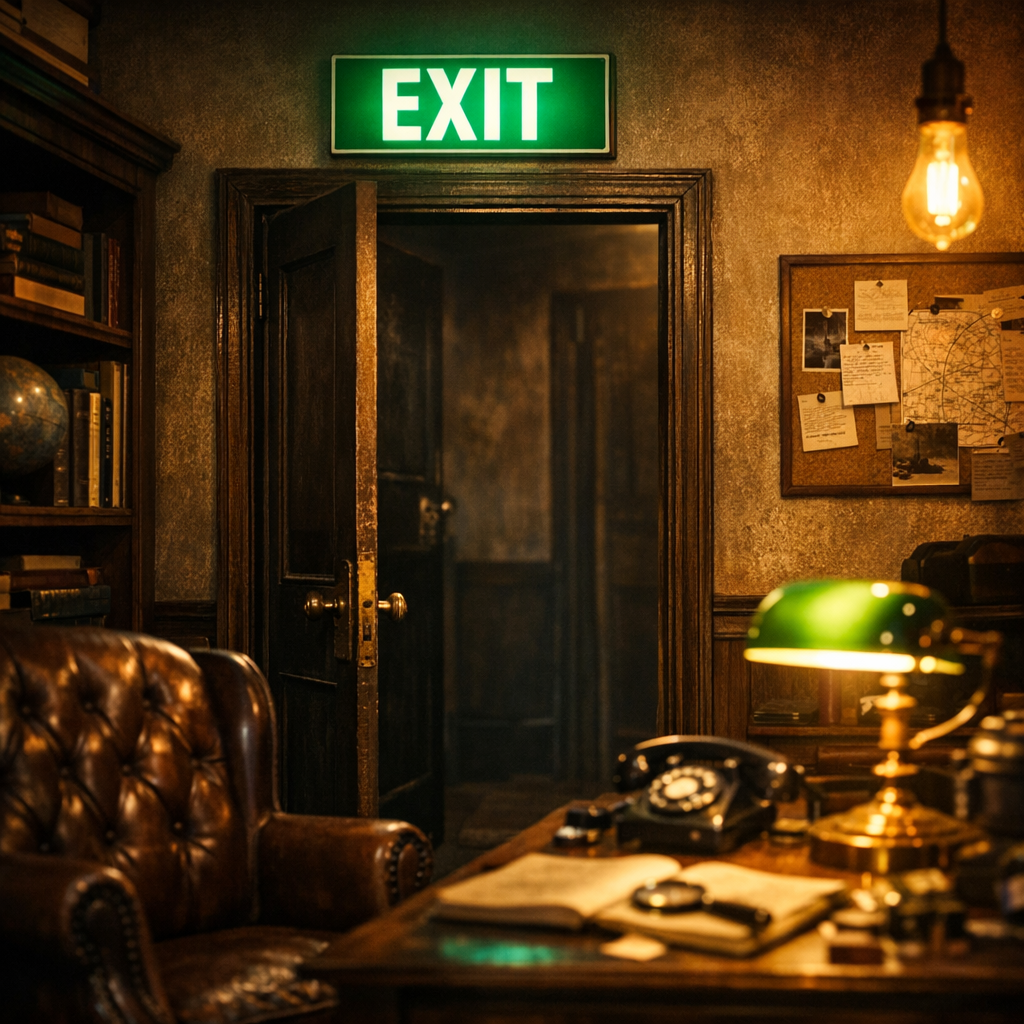
  • Visible “EXIT” signage inside the room (some have backlit signs that stay on during gameplay)
  • Cameras and audio you can see/notice
  • Real address, real phone number, real reviews

What to avoid:

  • Pop-up rooms with no permanent location
  • Operators who can’t tell you their fire-code compliance details
  • “Ultra-realistic” rooms claiming to actually trap you (this is illegal at any commercial venue)
  • Pop-up haunted house events that aren’t escape rooms but advertise as such (different rules)

If you have any doubt, call the operator before booking and ask: “Is the egress door key-free from inside? What’s the emergency exit briefing process?” Legitimate operators answer this confidently.

What We Do at Infinity Escape

  • Egress door is unlocked from the inside at all times during gameplay. Single-handle operation.
  • Backlit “EXIT” sign visible during play (yes, we’ve themed them to fit the rooms).
  • Cameras + audio in every room, monitored continuously.
  • Emergency briefing before every game — GM walks you through the exit, the panic-stop, the bathroom location.
  • Pause the clock for any reason — bathroom, water, anxiety, phone — all free, no time penalty.
  • Open the door within 30 seconds if you say “I want out.” We’ve never made anyone wait.
  • Fullerton Fire Department certified at our 108 E. Amerige Ave location.

If safety is your concern, you should never feel pressured to play through it. Tell us at booking if you have anxiety or claustrophobia and we’ll proactively show you the exit before the game starts.

Magic Cottage · Zombie Lab · Claustrophobia guide · Contact us before booking

Frequently Asked Questions

Are you actually locked in an escape room?No. California fire code requires every room to have a door that opens from the inside without a key or solved puzzle. The “lock” is the theme of the game; the actual door is always free egress. You can leave at any time.
What happens if there’s a fire during an escape room?The egress door opens normally with one motion. Magnetic locks (used in some rooms) are required to fail-safe and auto-open in a power outage or fire-alarm trigger. The GM also opens the room remotely.
Can I leave if I get claustrophobic during an escape room?Yes. Tell the game master via the in-room camera or speaker — they open the door within seconds. No judgment, no stigma. Most operators handle this multiple times a month. Pause the clock or end the game entirely.
What if I need to use the bathroom during the game?Tell the game master. They pause the clock, open the door, escort you to the front-desk bathroom, then resume the clock when you return. Standard at most operators, including us.
Are escape rooms safe for people with anxiety?Generally yes, with caveats. Tell the operator at booking that anxiety is a concern. They’ll show you the exit pre-game, brief on the panic-stop button, and can pause/open at any time. Avoid horror-themed rooms with jump scares if anxiety is severe.
Do game masters watch you the whole time?Yes. Cameras and microphones in every room, monitored continuously by the GM. Partly for hint delivery, partly for safety. They respond to verbal requests within seconds.
Can I quit an escape room mid-game and get a refund?You can quit anytime. Refund policies vary — most operators won’t refund a slot since it’s non-recoverable, but many offer credit toward a future visit. Ask before booking if this matters to you.

Updated April 2026. Fire-code specifics vary by jurisdiction. California Fire Code Section 1010 referenced. Confirm safety practices with each operator at booking.
By |2026-04-26T12:46:22-08:00April 24th, 2026|Latest News|

Escape Room vs Disneyland: When to Pick Each (Honest OC Comparison)

Short answer: a 60-minute escape room costs $90–120 total for a group of 4 and takes 90 minutes door-to-door. A Disneyland day for the same group costs $800–1,400 with park tickets, parking, food, and souvenirs, and takes 10–14 hours. They serve totally different needs. If you’re an adult group, a couples weekend, or visitors tired of theme park crowds, the escape room often wins. If you’re with kids 6–13 who haven’t been to Disney, it’s not even a contest. From a Fullerton operator 8 minutes from the park gates.

The Cost Comparison Nobody Talks About

Here’s an apples-to-apples breakdown for a group of 4 adults on a Saturday:

Cost item Disneyland (4 adults) Escape room (4 adults)
Tickets / room $520–760 (1-day single park) $90–140 (60–75 min)
Parking $35 $0 (free street)
Lunch + dinner (in-park or near) $120–200 $60–100 (one meal)
Snacks / coffee / water $40–60 $0–10
Souvenir / t-shirt $60–120 (typical) $0
Total $775–1,175 $150–250

Disneyland costs roughly 5–6x more for an adult group. The gap widens if you’re a family of 5 or 6 (we max at 7 in Zombie Lab, 6 in Magic Cottage — same flat price for the room).

The Time Comparison

Activity Disneyland Escape room
Drive + park 30–45 min 10–15 min
Wait in lines / setup 2–4 hours total 10 min check-in
Actual experience 8–12 hours 60–75 min
Drive back 30–45 min 10–15 min
Door-to-door 10–14 hours ~90 minutes

Disneyland is a full-day commitment. An escape room is a chunk of an evening that leaves the rest of the day open for dinner, drinks, or other activities.

Who Each Wins For

Disneyland wins when…

  • Kids 5–12 who haven’t been (no contest — Disney wins)
  • Multi-day trip where you’re already paying for hotels (cost spreads better)
  • You want spectacle, parades, fireworks, the full pageantry
  • Group includes very different age ranges (Disney scales for everyone)
  • You actively enjoy crowds and waiting in line for big rides

Escape room wins when…

  • Adult group (no kids under 8) where everyone wants to do something together
  • Birthday or bachelor/bachelorette parties (60 min of pure shared focus)
  • Date nights (forced phone-down, problem-solving collaboration)
  • Visitors who’ve already done Disney 3+ times
  • Locals who don’t want to spend $1,000 on a Saturday
  • Corporate team building (Disney is too long, escape rooms are 60 min)
  • You want a story-driven, immersive experience without crowds

The “Tired of Disneyland” Crowd

This is a real and growing segment. We see it weekly: visitors staying near Disneyland who book an escape room mid-trip because they need a break from the parks. The pattern goes:

  • Day 1: Disneyland
  • Day 2: Disneyland (kids exhausted but happy)
  • Day 3: Adults need a break — book Magic Cottage or Zombie Lab in Fullerton (8 min away), grandparents watch the kids at the hotel pool
  • Day 4: Disney California Adventure

The 60-minute escape room becomes the recharge for the adults. Drive 8 minutes north, escape something, dinner in Downtown Fullerton, back to the hotel by 10 PM. We hear “this was the best part of our trip” surprisingly often.

Disneyland-Adjacent Itinerary

If you’re staying at a Disney resort hotel and want a half-day escape from the parks:

  1. 5:00 PM — leave hotel, 8-minute drive north to Fullerton
  2. 5:15 PM — park free on Amerige Ave (free after 6 PM weekdays, free all day weekends)
  3. 5:30 PM — early dinner in Downtown Fullerton (Madero, Heroes, Olde Ship — all 5-min walk from the room)
  4. 7:30 PM — escape room at Infinity Escape (60–75 min)
  5. 9:00 PM — dessert + drinks in Downtown Fullerton
  6. 10:30 PM — back at the hotel

Total cost for 4 adults: ~$300–400. Total time: ~5.5 hours including dinner. We have a more detailed Downtown Fullerton itinerary guide.

Pros and Cons (Cleaner Side-by-Side)

Disneyland

Pros: Iconic, multi-generational appeal, weather-dependent attractions, FastPass system, food variety, character meets, fireworks, the magic factor.

Cons: Expensive, exhausting, crowds, long lines, inconsistent ride wait times, food prices high, parking + walking eats time.

Escape Room

Pros: Cheap per person, indoor (climate controlled), no waiting, deeply collaborative, story-driven, finishes in time for dinner, no crowds, adult-conversation-friendly, 60-minute focused experience.

Cons: Not for kids under 6, only 60–75 minutes, can be claustrophobic for some (we have a separate claustrophobia guide), the room ends and that’s it (no all-day immersion).

Combining Both Smartly

Best multi-day OC trip pattern we see for groups of 4–6 adults:

  • Day 1: Disneyland (full day, $700–1000)
  • Day 2: Beach + escape room evening ($150–250 escape room + beach is free)
  • Day 3: Disney California Adventure or recovery day

You hit the iconic stuff but break it up with cheaper, indoor, story-driven OC experiences. Most visitors don’t realize Fullerton is so close — 8 minutes north of Disneyland resort, off the 5 freeway.

What We Actually Hear from Disneyland Visitors

Direct quotes from feedback after the room:

  • “This was way more fun than the Indiana Jones ride and we waited 80 minutes for that.” — couple from Phoenix
  • “We were burned out from Disneyland by day 2. This was perfect.” — family of 5 from Texas
  • “We came back next year specifically for the escape rooms.” — couple from Bay Area
  • “Why isn’t this in every Disney guide?” — local Anaheim parent

The consensus pattern: Disneyland is great but escape rooms scratch a different itch — story, problem-solving, group focus — that Disney doesn’t really offer.

If You Pick Just One (Adult Group)

If you have one Saturday and one decision and you’re an adult group with no kids: the escape room. You’ll have a more memorable shared experience for a fraction of the cost, finish by 9 PM with energy left for the night. Disneyland is for kids, multi-generational families, and people specifically there for the Disney brand. Adult groups consistently report higher satisfaction from a single 60-minute escape than from a 10-hour Disney day, when honest about it.

Magic Cottage · Zombie Lab · Disneyland-area details · Pricing

Frequently Asked Questions

Is an escape room cheaper than Disneyland?Significantly. A 60-minute escape room runs $90–140 total for a group of 4, while a Disneyland day for the same group costs $775–1,175 including parking, food, and souvenirs. About 5–6x cheaper.
How close is Fullerton to Disneyland?Eight minutes by car (about 4 miles) directly north of the Disneyland resort, off the I-5 freeway. From Disneyland’s main parking, you can reach Infinity Escape in under 15 minutes including the freeway exit.
Are escape rooms a good Disneyland alternative?For adult groups and couples, yes. They offer a focused 60-minute story experience for 1/5 the cost. For families with kids 5–12 who haven’t been to Disney, no — Disney still wins for that audience.
Can you do an escape room in the middle of a Disneyland trip?Yes, and many visitors do. Pattern: Day 1 Disneyland, Day 2 evening escape room in Fullerton, Day 3 California Adventure. The escape room becomes a recharge for adults between park days.
What’s a good evening plan if we want to skip a Disney park night?Drive 8 minutes north to Downtown Fullerton at 5 PM, dinner at 5:30, escape room at 7:30, drinks/dessert at 9, back to hotel by 10:30. Total $300–400 for 4 people including everything.
Is an escape room better than a theme park ride for groups?Different category. Theme park rides are 3–5 minutes of spectacle; escape rooms are 60 minutes of shared problem-solving. For groups that want collaboration, conversation, and shared memory creation, escape rooms produce stronger group bonds per minute.
Can young kids do escape rooms instead of Disneyland?Probably not as a substitute. Most escape rooms have minimum ages (typically 8 or 10) because puzzles require reading and abstract thinking. Disneyland is genuinely better for children 5–10. Escape rooms shine for ages 12+ and for adult groups.

Updated April 2026. Disneyland prices vary by date and tier. Compare official Disney park ticket pricing for current rates.

By |2026-04-26T12:44:48-08:00April 24th, 2026|Latest News|

What Happens If You Don’t Escape in 60 Minutes? (Honest Operator Answer)

Short answer: when the timer hits zero, the game stops, but the experience usually doesn’t. Most operators (us included) walk you through the rest of the puzzles so you see how the story ends, take a “did not escape” photo, and send you out with the same dignity as winners. The industry-wide escape rate is around 50–60% by design — rooms are calibrated so half of teams don’t make it. You’re not bad at this. The room is built that way.

What Actually Happens When the Timer Hits Zero

This varies by operator, but here are the three patterns:

The Walkthrough (most common in OC)

Game master comes in or speaks over the audio. Says “time’s up — but let me show you what you missed.” Then walks you through the remaining puzzles, showing you the answers, demonstrating how mechanisms worked. Usually 5–10 minutes. You leave understanding the full game.

This is what we do at Infinity Escape, and what most independent operators in OC do. It feels good — you don’t leave frustrated.

Hard stop (rare)

Some operators (typically corporate-owned chains, some competitive-mode rooms) just open the door at zero. No walkthrough, no explanation. You walk out not knowing how the room ended.

This feels bad. It’s becoming uncommon. If a room you’re considering does this, that’s a yellow flag for customer-friendliness.

Extension offered (occasional)

Some operators will offer you 5 or 10 extra minutes if you’re close (like 1 puzzle away from the final). Sometimes for an extra fee, sometimes free as a courtesy. Less common because it disrupts the next group’s slot, but not unheard of.

The Industry Escape Rate: ~50–60%

Here’s the data point that most first-time players don’t know: the escape room industry averages a 50–60% success rate across rooms.

That number is intentional. Operators design rooms to land in this range because:

  • If 95% of teams escape, the room is too easy — repeat customers feel cheated, word-of-mouth suffers (“it was easy, save your money”).
  • If 20% escape, the room is too hard — most customers leave frustrated, online reviews tank, the operator loses business.
  • 50–60% feels right — winners feel earned, losers feel like they came close. Both leave with stories.

So if you didn’t escape: statistically, you’re in the same boat as half of every team that’s ever played. That’s not failure. That’s the design working.

The Confusing Difference: “Escape Rate” vs “Completion Rate”

Some operators publish a single percentage. Others split into two:

  • Escape rate — % of teams that finished within the time limit, no hints rule applied. The honest number.
  • Completion rate — % of teams that finished AT ALL, even if it took 70 minutes instead of 60, or even if the GM had to give the answer to the last puzzle. Always higher than escape rate, sometimes 90%+.

If an operator advertises “92% completion rate” without specifying, that’s marketing. The real escape rate is probably 50–60%.

The Top Reasons Teams Don’t Escape

From watching thousands of attempts, the patterns are clear:

1. Too much chitchat in the first 10 minutes

Teams spend 10 minutes admiring the set, taking photos (mentally — phones are usually locked away), bantering with each other. The clock burns. By the time they actually start solving, they have 50 minutes for a 60-minute design.

The fix: assign one person to be “search mode” from minute 1. Have them call out everything they find while others process the storyline.

2. Bad team composition

Two engineers, no creative thinkers. Or four creative people, nobody to do the math. Mixed skill teams escape more reliably.

3. The “I’ve got this” person

One team member decides they’re going to solve it, holds onto a clue, won’t share, won’t take input. Team escapes much less often. Loud collaborators escape more often than silent solo solvers, even when the silent person is technically smarter.

4. Hint avoidance

Teams who refuse to ask for hints to “stay pure” escape less than teams who ask early. We covered this in detail in our guide on how hints work.

5. Underestimating the room’s difficulty

“It’s just a puzzle room, how hard can it be.” That mindset costs about 10 minutes of focus before the team realizes the room is actually clever.

6. The “we already saw this” trap

Teams find a clue, conclude it’s already been used, ignore it. Often that clue applies to TWO puzzles. We see it weekly.

What “Did Not Escape” Doesn’t Mean

  • Doesn’t mean you’re not smart enough. Most rooms are designed so smart teams still need 70 minutes if they don’t communicate well.
  • Doesn’t mean the room was unfair. Operators rebalance rooms based on team data. If escape rates drop below 30%, they make it easier. If above 75%, they make it harder.
  • Doesn’t mean it wasn’t fun. Many of our highest-rated reviews come from teams that didn’t escape. The journey is the point.
  • Doesn’t mean you wasted money. You bought a 60-minute experience, not a guaranteed escape. The experience happened either way.

What Happens After You Don’t Escape

Standard at most operators (us included):

  1. Walkthrough (5–10 min) — GM shows you what you missed. Most teams have a “OH! That’s what that was for!” moment.
  2. Photo — same as winners, just with a different sign or board reading “we’ll be back” or similar.
  3. Brief debrief — GM tells you how close you were, which puzzle slowed you down, what your clock looked like vs. industry average.
  4. Booking suggestion — operator may suggest the easier room next time, or offer a discount if you bring back the same team to try again.

Should You Choose an Easier Room To Guarantee Escape?

Honest answer: no. The escape itself is less satisfying than you think. The journey is what people remember.

Teams that pick the “easiest” room to guarantee escape often leave less satisfied than teams that pick a harder room and don’t escape. The “we almost made it” near-miss creates a stronger memory than the “yeah we got out with 5 minutes left.”

If anything: pick a room you’re excited about based on theme, regardless of difficulty rating. Excitement > ease.

What We Do at Infinity Escape When You Don’t Escape

  • Always do the walkthrough — never just open the door. We want you to see the full story.
  • Photo with the room as your backdrop — same as winners.
  • Honest debrief — we tell you how close you were and which puzzle was your wall.
  • “Come back” offer — repeat teams within 6 months get 10% off the same room. Most teams that didn’t escape but want a redo find this fair.
  • Recommend the other room next time — if you tried Magic Cottage and didn’t escape, we’ll often suggest Zombie Lab as a different vibe.

Magic Cottage · Zombie Lab · Pricing

The Mindset Shift That Changes Everything

If you walk in thinking “we have to escape,” you’ll probably play tense, fight with teammates, and lose anyway.

If you walk in thinking “we have 60 minutes to play this game together,” you’ll probably escape. Or not. But you’ll have a way better time, and your team won’t remember the result — they’ll remember laughing in a Victorian magic cottage at midnight, or freaking out together at the sound of a zombie groan.

The escape is incidental. The hour together is the product.

Frequently Asked Questions

What happens if you don’t escape an escape room in time?The timer hits zero, the game stops. Most operators then walk you through the remaining puzzles, take a photo, and debrief on how close you were. Some offer a small extension if you’re close. Rare operators just open the door — that’s a yellow flag for customer-friendliness.
Do you still get to see how the room ends if you don’t escape?Usually yes. Most operators do a 5–10 minute walkthrough showing you the answers and how the story concludes. You leave understanding the whole game. A few operators (typically corporate chains) skip this — ask before booking if it matters to you.
What percentage of teams escape an escape room?Industry average is 50–60%. Rooms are intentionally calibrated to this range — easier means too unsatisfying, harder means too frustrating. If you didn’t escape, you’re statistically in the same group as roughly half of every team that’s ever played.
Can you get extra time in an escape room?Sometimes. A minority of operators will offer a 5–10 minute extension if you’re very close to finishing, occasionally for an extra fee. Most don’t, because the next group is waiting. Ask the game master before time runs out if you really want this option.
Do you get a refund if you don’t escape?No. You bought a 60-minute experience, not a guaranteed escape. Most operators offer a discount on a return visit (we offer 10% off within 6 months for the same team). Some never advertise this — ask at debrief.
Why didn’t we escape — was the room unfair?Almost certainly not. Operators rebalance rooms based on team data. The most common reasons teams don’t escape: too much chitchat early, one teammate hoarding clues, hint avoidance, and underestimating the room. None of those are the room’s fault.
Is it embarrassing to not escape an escape room?No. Half of every team doesn’t escape. Game masters watch hundreds of teams a year and your particular result isn’t memorable. Many of the most-fun groups don’t escape — the photo and the journey matter more than the result.

Updated April 2026. Operator policies vary. Confirm walkthrough, extension, and discount policies with each venue when booking.

By |2026-04-26T12:46:33-08:00April 24th, 2026|Latest News|

How Escape Room Hints Actually Work (Free, Penalty, or Unlimited)

Short answer: most Orange County escape rooms offer unlimited free hints — you can ask as often as you need without penalty. A minority cap hints at 3 or charge time penalties. Always confirm the hint policy when booking. Using 2–4 hints in a 60-minute room is normal and expected — they’re built into the design, not a sign of failure.

The Three Hint System Models

Every escape room operator uses one of three approaches:

Model How it works Common at
Unlimited free Ask any time, no cap, no penalty Most independent operators including Infinity Escape
Capped (typically 3) Limited number per game, often via “hint coins” or push-button system Some national chains, premium operators
Time penalty Each hint deducts 1–3 minutes from your remaining time Competitive-mode operators, certain themed rooms

The trend over the last 5 years is toward unlimited free hints. Capped and penalty systems made sense early in the industry when puzzle design was new and operators wanted to feel “earned” wins, but they create friction and unhappy customers. Most modern operators have abandoned them.

How Hints Are Delivered

Operators use a few different delivery mechanisms:

Game master via screen / TV in the room

Most common in OC. A monitor or screen displays text hints when the GM types them. Players ask out loud (“we need a hint on the lock”), GM types a response, players read it. Pros: subtle, doesn’t break immersion. Cons: requires players to look at the screen.

Game master via speaker / radio

GM speaks hints over a speaker. Some operators use a “walkie-talkie” prop the players carry. More immersive but louder and can interrupt teammates.

Hint button / push-to-request

Some rooms have a physical button you press to request a hint. Often paired with a hint cap (e.g., 3 button presses allowed). Tactile but can feel game-like.

In-character clue characters

Premium experiences sometimes use a “guide character” in the storyline who delivers hints. Most expensive to operate, rare in OC.

How Many Hints Should You Use?

Across the industry, the average successful team uses 2–4 hints per 60-minute room. Here’s the breakdown:

  • 0–1 hints: Either a very experienced team OR an unusually easy room. Bragging rights, but rare.
  • 2–4 hints: Normal. The room was designed with this many “stuck points.” You’ll escape with time to spare.
  • 5–7 hints: The room is on the harder end OR your team is missing a key skill (math, observation, communication). You’ll likely escape near or at the buzzer.
  • 8+ hints: Either the GM is being generous, or you’re seriously stuck. Many rooms cap actual escapes at this point — past 8 hints, you’re being walked through the room rather than solving it.

Pro tip from the operator side: teams that use hints early (around the 15-minute mark) escape more often than teams that try to white-knuckle it for 30 minutes before asking. Hints are a tool, not a failure.

When to Ask for a Hint

Strategy matters. Here’s when to ask:

1. After 5 minutes of zero progress on a single puzzle

If your group has been staring at a single lock or clue with no idea what to do for 5 full minutes, ask. The puzzle is designed to be solvable in under 5 minutes once you “see it.” More time staring won’t help — fresh information will.

2. When you’ve found a clue you can’t make sense of

You found a number, a symbol, or an object — but you don’t know what it goes to. Ask: “We found this number. What does it apply to?” The GM will redirect you.

3. When the team is splitting / arguing

If two people are convinced of two different solutions and stuck, ask. The argument wastes time. The GM can resolve it in 10 seconds.

4. When time pressure is closing in (15 min left)

Don’t try to be a hero in the final 15 minutes. Ask for hints freely — you want to ESCAPE, and a hint-aided win is still a win.

When NOT to Ask for a Hint

  • You haven’t searched the room yet. If your team hasn’t fully searched the space, ask each other before asking the GM. Don’t waste a hint on “where do we look?” when the answer is “everywhere.”
  • You haven’t communicated as a team. Half the time, someone in the group already knows part of the answer. Talk first.
  • The puzzle is fresh (less than 2 minutes in). Give your brain a chance.

Hint Etiquette: How to Ask

Game masters love specific questions and hate vague ones:

Good asks

  • “We’ve tried these four combinations on the box. Are we close?”
  • “What do these symbols on the wall correspond to?”
  • “We’re stuck on the math puzzle. Can you nudge us?”

Bad asks

  • “We need a hint.” (GM doesn’t know which puzzle.)
  • “Just give us the answer.” (GMs typically guide, not solve.)
  • “Is this thing important?” (Without context, GM has no way to help.)

Be specific about what you’ve tried and what you’re stuck on. The hint will be much more useful.

The “Hint Tiers” System

Most operators (us included) deliver hints in tiers when you’re really stuck:

  1. Tier 1 — Nudge: “Have you looked closely at the framed picture on the back wall?”
  2. Tier 2 — Specific direction: “There’s a number hidden in the picture. Examine it more carefully.”
  3. Tier 3 — The answer (rare): “The number is 472. Try it on the small lock.”

If your group is enjoying figuring it out, GMs use Tier 1. If you’re frustrated or short on time, they escalate. Most groups never need Tier 3.

What We Do at Infinity Escape

Honest take from our side:

  • Unlimited free hints. No cap, no penalty, no awkward “do we save it?” calculation.
  • Game master watches via camera and types hints to a screen in the room.
  • We default to Tier 1 hints unless you’re clearly frustrated or low on time.
  • We sometimes give hints unprompted if you’ve been stuck for 5+ minutes and the puzzle is gating the rest of the game. The goal is for you to escape, not to fail at minute 47.
  • Most groups use 2–4 hints in our 60-minute Zombie Lab, 3–5 in our 75-minute Magic Cottage (more puzzles, longer game).

The Magic Cottage · The Zombie Lab · Pricing

Common Misconceptions

“Using hints means we lost”

No. Hints are part of the game design. Rooms are calibrated for 2–4 hints to land most teams in the “escaped with time to spare” bucket. Using zero hints means you got lucky on a hard room or the room was easy.

“We’ll be embarrassed asking for help”

Game masters watch hundreds of teams a year. Your hints aren’t memorable to them. The GM literally will not remember whether you used 2 or 8 hints by next week.

“Asking too early ruins the experience”

Asking too LATE ruins the experience. We’ve watched teams white-knuckle a single puzzle for 25 minutes, refuse to ask for help, and run out of time. They leave grumpy. Teams that ask at minute 15 escape and leave on a high. Ask earlier than feels comfortable.

Frequently Asked Questions

How many hints can I get in an escape room?It depends on the operator. Most independent rooms in Orange County offer unlimited free hints. Some chains cap at 3 hints. A few use time penalties (1–3 minutes per hint). Always confirm when booking.
Do hints cost time in escape rooms?Usually no. Most modern operators offer hints with no time penalty. A minority of older or competitive-mode rooms still use time penalties of 1–3 minutes per hint. Ask before booking.
How many hints does the average team use?2 to 4 hints in a 60-minute room. Rooms are designed expecting this many — using 0 means the room was easy or you got lucky, using 8+ means you’re being walked through it.
Will the game master just give us the answer?Usually not on the first ask. Most operators use a tiered system: nudge first, specific direction second, full answer only if you’re truly stuck or out of time. The goal is for you to feel like you solved it.
When should we ask for our first hint?Around the 10–15 minute mark if you’re not making progress on a puzzle. Asking early actually correlates with escape success. Don’t wait until you’re desperate.
How do hints get delivered in escape rooms?Most commonly via a screen or TV in the room where the game master types text hints. Some use audio speakers, some use physical hint buttons, a few use in-character actors.
Is using hints embarrassing?Not at all. Game masters watch hundreds of teams use hints — yours aren’t memorable. Hints are a designed part of the experience, not a sign of failure.

Updated April 2026. Hint systems vary by operator. Confirm specific policies with each venue when booking.

By |2026-04-26T12:46:49-08:00April 24th, 2026|Latest News|

The Perfect Date Night in Downtown Fullerton (3-Hour Itinerary)

Short answer: Park once on W. Amerige Ave. Dinner at 6 PM, escape room at 7:30 PM, drinks at 9 PM, dessert at 10 PM. Total: 3 hours, all walkable, $150–200 for two. Honest local breakdown of the best places to do each step. From an escape-room operator who watches couples plan this every weekend.

Why Downtown Fullerton Is OC’s Best Date Night Setup

Most of Orange County is suburban sprawl — dinner in one shopping center, entertainment 15 minutes away across a freeway, dessert another stop entirely. You spend half the night moving the car.

Downtown Fullerton is the rare exception. The 4-block stretch of W. Amerige Ave between Harbor Blvd and Malden has:

  • 10+ walkable restaurants (Mexican, American, pub, deli, vegan)
  • 5+ bars and breweries within 2 blocks
  • 2 escape rooms (us)
  • 3 dessert spots within 1 block
  • Free street parking after 6 PM weekdays + all day weekends

You park once, walk to everything, and don’t move the car until you leave. That’s the entire pitch.

The 3-Hour Itinerary (6 PM – 9 PM Couples Edition)

6:00 PM — Dinner

Plan 75 minutes. Avoid heavy meals (you’ll be moving in the escape room). Three local picks by vibe:

  • Madero 1899 (111 N Harbor Blvd) — Upscale Mexican, voted best margaritas in OC. Reserve Thu–Sat. Best for “we’re dressing up tonight” energy.
  • The Olde Ship (W. Amerige Ave) — Traditional British pub. Fish and chips, Guinness, dark wood. Casual + cozy. No reservations needed weekdays.
  • Heroes Bar & Grill (125 W Santa Fe Ave) — American pub-meets-restaurant. Towering burgers, lots of beer. Casual + loud. Walk-ins OK most nights.

Order a single drink with dinner — save the second round for after the escape room. Why: alcohol noticeably hurts pattern recognition in escape rooms, and you want to actually win.

7:15 PM — Walk to the Escape Room

108 E. Amerige Ave is at the heart of Downtown. Most restaurants are within a 5-minute walk. Plan to arrive at the room 15 minutes before your booked slot for parking, check-in, and briefing.

7:30 PM — The Escape Room

This is the centerpiece of the night. Two options at Infinity Escape:

For couples who love stories + puzzles

The Magic Cottage — 75-minute family-friendly mystery. Cinematic set, magic-themed puzzles, no scares. Perfect for date nights where you want to talk + collaborate. $120 flat for 2 players. Up to 6.

For couples who want adrenaline

The Zombie Lab — 60-minute horror thriller. Low light, jump scares, animatronic effects. Better for couples who like a little fear together (it triggers bonding chemistry, weirdly). $90 flat for 2 players. Up to 7.

Either way, the escape room is a forced 60–75 minutes of high-stakes collaboration with no phones — which is the entire point of date night.

9:00 PM — Drinks (Decompress)

You just spent 60–75 minutes in problem-solving mode. Your brain wants to chill. Three picks:

  • Mickey’s Irish Pub (100 N Harbor) — Cozy Irish pub. Quiet enough to actually talk. Pints + decent whiskey.
  • High Horse Saloon (102 N Harbor) — Western-themed bar with country music + DJs on weekends. Higher energy, good for couples who want to dance after.
  • Bootlegger’s Brewery (2 blocks off main strip) — Local brewery with dog-friendly patio. Lower-key vibe, IPAs + seasonals.

Don’t try to cover all three. One drink at one spot. Talk about your favorite moment in the escape room.

10:00 PM — Dessert

End the night on something sweet. Both within 1 block:

  • SomiSomi (305 N Harbor Blvd) — Korean soft serve in fish-shaped taiyaki cones. Instagram-famous. Open until midnight Fri–Sat.
  • Milk & Cookies (119 E Commonwealth) — Gluten-free bakery with warm cookies, homemade ice cream, six flavored milks. Open until 11 PM weekdays.

Total Cost Breakdown (Two People)

Stop Cost (2 people)
Dinner (incl. one drink each) $60–90
Escape room (Magic Cottage 2 players) $120
Drinks after (1 round each) $15–25
Dessert $10–15
Parking $0 (free after 6 PM)
Total $205–250

You can drop this to ~$170 by skipping dessert and limiting to one drink after.

Pro Tips from a Local Operator

  1. Book the escape room first. Slots fill on Friday and Saturday evenings. Pick your time, then plan dinner around it.
  2. Pick a Tuesday–Thursday night for first dates. Less crowded, more relaxed atmosphere. Restaurants don’t rush you. Escape rooms are easier to book.
  3. Avoid heavy/spicy dinners. You’ll be standing, bending, sometimes climbing for 60–75 minutes. A 1500-calorie pasta dish is brutal in that environment.
  4. Don’t drink more than two beers before the escape room. You’ll lose. We see it weekly.
  5. Wear comfortable, closed-toe shoes. Heels are technically allowed but you’ll regret them. Save them for the bar after.
  6. Phones go in lockers. Most rooms confiscate them. Plan accordingly — if you need to reach a babysitter, alert the game master beforehand.
  7. The room is the conversation. Couples who treat it as a “we’re solving this together” experience leave on a high. Couples who get competitive (“you’re not listening to me”) leave grumpy. Frame it right.

Variations by Vibe

For Anniversaries / Special Occasions

Upgrade dinner to Madero 1899’s patio. Book the Magic Cottage (the cinematic story room) over horror. End with dessert at SomiSomi (more photo-worthy than Milk & Cookies). Total: $250–300.

For First Dates

Counter to popular wisdom, escape rooms are GREAT first dates — they replace 90 minutes of awkward small talk with shared problem-solving. Pick the Magic Cottage (less intense, easier to talk during). Skip the dressy restaurant — Heroes or Olde Ship are casual enough for a first date. Total: $150–180.

For Date Nights with Kids at Home

If you have a babysitter, lean into it. Make it a 4-hour evening: longer dinner, the escape room, an extended drinks stop. Phones in lockers means actual quality time. More on date night logistics here.

For Tourists Visiting Disneyland

Downtown Fullerton is 8 minutes north of Disneyland — a perfect “let’s get OUT of theme park land” date night. Park hotels are loud and chaotic; Downtown Fullerton is the chill, walkable alternative. Disneyland-area details here.

Bottom Line

Downtown Fullerton is the only spot in OC where you can do dinner + escape room + drinks + dessert without ever moving your car. The escape room is the differentiator — it’s the rare date-night activity that creates shared memories instead of just filling time. Pricing · book now.

Frequently Asked Questions

Are escape rooms actually good for first dates?Yes — counterintuitively. They replace 90 minutes of small talk with collaborative problem-solving, which builds rapport faster than dinner conversation alone. Pick a non-horror room for first dates.
How much does a Downtown Fullerton date night cost?$170–250 for two people, including dinner, an escape room, drinks, and dessert. Parking is free after 6 PM.
What’s the best time to start a date night in Downtown Fullerton?6 PM. Dinner finishes by 7:15, escape room at 7:30, drinks at 9, dessert at 10. Home by 10:30. The whole walkable district stays lively until midnight.
Can two people do an escape room together?Yes. We charge $90 flat for 2 at the Zombie Lab and $120 flat at the Magic Cottage. Two players can complete the rooms with hints, though you may need 2–3 more hints than a 4-person team.
Should we eat before or after the escape room?Before, but lightly. You’ll be moving and a heavy meal slows you down. If you want a big dinner, do it after — most Downtown Fullerton restaurants serve until 10 or 11 PM.
Is parking really free in Downtown Fullerton at night?Yes — street parking on Amerige Ave is free after 6 PM weekdays and all day weekends. The Fullerton Transportation Center garage one block north on Harbor is also free in evenings as a backup.
Mystery or horror escape room for date night?Mystery (Magic Cottage) for first dates and chill nights. Horror (Zombie Lab) for couples who already love each other and want adrenaline-bonding. Don’t pick horror for a first date unless you’ve explicitly discussed it.

Updated April 2026. Restaurant hours and venue availability vary. Verify with each business before your night out.

By |2026-04-26T12:47:18-08:00April 24th, 2026|Latest News|

Halloween Escape Rooms in Orange County (2026 Locals’ Guide)

Short answer: Orange County has 12+ horror-themed escape rooms operating year-round, but Halloween season (Sep–early Nov) brings the heaviest demand and best atmosphere. Book 3–4 weeks ahead for any October weekend slot. Top picks: The Zombie Lab (Fullerton), Mission Escape Games (Anaheim), The 17th Door (Buena Park — walk-through, not a true escape room). Honest local breakdown below from an OC operator.

Why Halloween Is Peak Escape Room Season

Escape rooms see their busiest weeks of the year between September 15 and November 1. Three reasons:

  1. Halloween mood. People want scares but don’t want to commit to a 2-hour haunted house in a corn maze. A 60-minute horror escape room hits the same nerve.
  2. Group activity for adults. Halloween is the rare holiday where adults seek out group activities other than dinner or bars. Escape rooms fit perfectly.
  3. Limited horror room supply. Most escape rooms in OC are mystery/adventure themed. Only a few are explicitly horror, and demand crushes them in October.

If you’re targeting Halloween weekend (Oct 30–Nov 1), book by mid-October at the latest. Late-October Saturday evenings often sell out 4+ weeks ahead at popular rooms.

Escape Room vs Haunted House: Pick the Right One

OC has both, and they’re very different experiences:

Format What it is Good for
Horror escape room Puzzle-solving in a horror-themed environment. 60–75 min. Atmosphere + jump scares but solving is the goal. Groups of 4–8 who want a brain workout with adrenaline
Haunted house / walk-through Linear walk through scary scenes. Live actors, no puzzles. 15–30 min total. Date nights, thrill-seekers wanting raw scares
Theme park haunt Knott’s Scary Farm, Universal Halloween Horror Nights. All-night events with mazes. Big groups, full-night-out experiences

This guide focuses on horror escape rooms — puzzle experiences in scary environments — not haunts or theme parks.

Best Halloween Escape Rooms in Orange County (2026)

The Zombie Lab — Infinity Escape (Downtown Fullerton)

Our 60-minute horror escape room. Built as horror from the ground up: custom sound design, animatronic effects, Dr. Jorg’s necro-virus storyline. Featured on Haunting.net as their favorite zombie-themed escape room. Ages 13+. Up to 7 players. Walking distance to dinner + drinks on W. Amerige Ave for a full evening. Details + booking here.

Mission Escape Games (Anaheim)

Multiple horror-themed rooms at the Anaheim GardenWalk. Convenient for Disneyland visitors looking for an off-park scare night. Solid puzzle design. October books out fast.

The 17th Door (Buena Park)

Technically a walk-through haunt, not a true escape room — but locals routinely lump it in. Live actors chase, touch, and scare you over 17 themed rooms. Intense. Adults only. Open Sep–Nov only.

Cinema Escape Rooms (Los Alamitos)

Rotating Halloween-themed rooms each year (Stranger Things, Nightmare Before Christmas). Production values are high. Good for film fans.

The Escape Game Orange / Irvine

National brand. Their flagship horror experiences in Orange and Irvine are well-produced, though rooms are spread across the county. Premium pricing ($45–55/player).

How Far Ahead Should You Book?

Date Lead time needed
Oct 30–Nov 1 (Halloween weekend) 4+ weeks ahead
Last 2 Saturdays of October 3 weeks ahead
Mid-October weekday evenings 1–2 weeks ahead
Early September weekdays A few days ahead
November 1–15 (post-Halloween) Often same-day available

Pro tip: if Halloween night sells out at your top pick, try the weekend BEFORE (Oct 23–25). The horror atmosphere is identical and availability is much better.

What Makes an Escape Room “Halloween-Themed”

Operators don’t usually rebrand year-round horror rooms for October. The “Halloween-themed” rooms you see on Yelp are almost always:

  • Year-round horror rooms running their normal experience (just busier in October)
  • Limited-time seasonal additions at puzzle/mystery operators (less common; check the operator’s website for “Halloween 2026”)
  • Walk-through haunts mislabeled as escape rooms (different format entirely)

If you want true Halloween production value (extra effects, themed actors, decorated lobby), look for operators that explicitly market a Halloween package — not just operators that have a horror room available.

Tips for Halloween Escape Room First-Timers

  1. Book a horror room with a small group (4–6 people). Larger groups dilute the scare factor; smaller groups (2–3) often find horror rooms harder than expected.
  2. Don’t drink too much beforehand. Two beers is fine. Four is too many — pattern recognition and short-term memory get noticeably worse, and horror rooms penalize that hard.
  3. Wear comfortable shoes you can run in. Most horror rooms don’t have actors chasing you, but some include physical elements (crawl spaces, low-headroom sections).
  4. Tell the game master if anyone is scared of the dark or has anxiety. They can adjust lighting and brief you on the panic button. More on anxiety + escape rooms here.
  5. Save your date night for AFTER, not during. Horror rooms have couples bickering 30% of the time — adrenaline kills romantic mood. Get drinks afterward.
  6. Check the age requirement. Most horror rooms in OC are 13+ or 16+ depending on intensity. Don’t bring younger kids — they don’t have a good time.

Combine with a Full Halloween Night Out (Downtown Fullerton)

If you book at Infinity Escape in Downtown Fullerton, you can build a full Halloween evening on foot:

The 3-Hour Halloween Itinerary

  1. 6:00 PM — Dinner. Madero 1899 (upscale Mexican) or Heroes Bar & Grill (American pub). Both 1-block walk.
  2. 7:30 PM — The Zombie Lab. 60-minute horror escape room. Book here.
  3. 9:00 PM — Drinks. Mickey’s Irish Pub, High Horse Saloon, or Bootlegger’s Brewery. Decompress and recap your favorite scare moments.
  4. 10:30 PM — Late dessert. SomiSomi or Milk & Cookies. Both open until 11:30 PM+.

Total cost (4 people): $400–500 for the full evening. Dinner $100, escape room $148, drinks $80, dessert $30.

What Makes the Zombie Lab Different

If you’re choosing between OC horror rooms, here’s the honest pitch for ours:

  • Built as horror from day 1. Many OC “horror” rooms are mystery rooms with dim lighting. The Zombie Lab was custom-designed with horror at the center.
  • No live actors. Some players want the “haunted house actor chasing you” experience. We don’t do that — scares are environmental (sound, light, animatronics, set design). Less intense than a haunt, but more sustainable for a 60-minute experience.
  • Real story arc. You’re a CIA operative stopping a virus outbreak. The plot has stakes that make the puzzles feel meaningful, not just busywork.
  • Walking distance to bars and food. Other OC horror rooms (Anaheim, Buena Park, Irvine) are in industrial parks or shopping centers. Downtown Fullerton is the only walkable horror-room-plus-dinner-plus-drinks setup in OC.

Pricing · Book now · or call (657) 235-2578 for Halloween extended hours.

Frequently Asked Questions

When should I book a Halloween escape room in Orange County?For Halloween weekend (Oct 30–Nov 1), book at least 4 weeks ahead. Last two October Saturdays need 3 weeks. Mid-October weekdays usually have availability 1–2 weeks out. Early November is the easiest time to book.
Are Halloween escape rooms scarier than year-round horror rooms?Usually no — most operators run the same horror room year-round. The October atmosphere comes from the season’s energy more than any room change. Some venues add seasonal effects, but the room itself is typically unchanged.
What’s the scariest escape room in Orange County?Among true escape rooms (not walk-through haunts): The Zombie Lab at Infinity Escape (Fullerton), and select rooms at Mission Escape Games (Anaheim). The 17th Door (Buena Park) is scarier but it’s a walk-through haunt format, not a puzzle escape room.
Are kids allowed in Halloween escape rooms?Most OC horror escape rooms are 13+ or 16+. Younger kids should book a non-horror mystery room instead — like our Magic Cottage. Halloween-themed but family-friendly options are rare in OC.
Can I do an escape room AND a theme park haunt the same night?Logistically tough. Theme park haunts (Knott’s Scary Farm, Universal HHN) start at 7 PM and run late. An escape room at 5 PM followed by a theme park haunt at 8 PM works if you stay close to Anaheim/Buena Park. Plan for 4+ hours of standing in lines at the haunt.
Do horror escape rooms have actors who touch you?Most don’t. Standard horror escape rooms in OC use environmental scares (sound, light, animatronics) without live actors. Walk-through haunts like The 17th Door do have actors who touch and chase. Always check the operator’s policy on physical contact before booking.
What if my group has someone who can’t handle scary?Pick a non-horror operator that has both mystery and horror rooms — that way the scared person can opt for the mystery room while the rest do horror. At Infinity Escape, the Magic Cottage (family-friendly) and Zombie Lab (horror) run simultaneously, so split groups can rejoin afterward for dinner.

Updated April 2026. Halloween 2026 pricing and availability vary by operator. Confirm specific dates and policies directly with each venue.

By |2026-04-27T07:54:56-08:00April 24th, 2026|Latest News|

Are Escape Rooms Claustrophobic? An Owner’s Honest Answer

Short answer: most escape rooms are not claustrophobic. You are never actually locked in — every reputable operator has an emergency exit and the game master can release you within seconds. Most rooms are 400–1,000+ sq ft, larger than a hotel room. A few themed rooms (cells, basements, submarines) are intentionally small. This guide breaks down how to tell before you book, plus owner-level honesty about what we run at Infinity Escape.

The “Locked Inside a Tiny Room” Myth

The biggest misconception about escape rooms: that you’re physically locked in a small space and can’t get out without solving the puzzles. Wrong on three counts.

  1. You’re never locked in. Fire codes require working emergency exits at all times. Any reputable escape room can release you within seconds — usually via the game master pressing a button to unlock the door, or via a clearly marked emergency exit you can walk through yourself. The “escape” in “escape room” refers to completing the mission, not being physically trapped.
  2. The game master is watching. Every room has a game master observing your group via camera. If anyone shows signs of distress, they intervene immediately — open the door, pause the game, or turn up the lights. Some rooms have a panic button you can press for instant exit.
  3. Most rooms are larger than you think. Industry standards for a 4–8 player room are 400–1,000+ square feet — bigger than most hotel rooms or studio apartments. You’re not crawling through a cabinet.

How Big Are Escape Rooms, Really?

Sizes vary wildly by operator and theme. Here’s the typical range across the industry:

Room type Typical size Feel
Single small themed room 200–300 sq ft Cozy, can feel tight with 6+ people
Standard escape room 400–700 sq ft Comfortable for 4–6, no claustrophobia
Multi-room experience 800–1,500 sq ft Spacious, multiple connected spaces
Large group / outdoor 1,000+ sq ft No claustrophobia possible

For reference: a typical hotel room is 300–400 sq ft. A 1-bedroom apartment is 600–800 sq ft. Most escape rooms fall in that range — the same space you sleep in or work from home in, just decorated differently.

The 4 Real Anxiety Triggers in Escape Rooms

If you (or someone in your group) has anxiety, the cause is usually one of these four. Only the first is technically claustrophobia.

1. Confined space (actual claustrophobia)

Smaller themed rooms (cells, basements, submarines, “buried alive” themes) can trigger this. Solution: skip rooms that explicitly market a small-space theme. Most rooms aren’t designed this way.

2. The “I can’t get out” feeling (anticipatory anxiety)

Even if you cognitively know you’re not locked in, the closing door + countdown timer can trigger anxiety. Solution: ask the game master to walk you through the exit before the game starts. Some operators (us included) will show you the emergency button on request.

3. Time pressure

The visible countdown adds adrenaline that some people read as anxiety. Solution: pick a room with a generous time limit (60–75 minutes) and a relaxed pace. Avoid rooms with constant alarm sounds or aggressive countdown effects.

4. Performance anxiety

Worry about looking dumb in front of friends, holding the team back, or being the one who can’t solve a puzzle. Solution: treat it like a group activity, not a competition. Rooms are designed expecting 2–3 hints — using them is normal.

How to Tell If a Room Will Trigger Claustrophobia BEFORE You Book

5-minute due diligence:

  • Check Yelp/Google review photos. Customer photos show the actual room. If players look comfortable in wide shots, you’re fine. Wide shots = bigger room.
  • Search the operator’s website for “size” or “square footage.” Most don’t list it, but some do. If they describe the room as “compact” or “intimate,” it’s small.
  • Read the theme name carefully. “The Cell,” “The Crypt,” “The Dungeon,” “Buried Alive,” “The Submarine” → small by design. “The Cottage,” “The Mansion,” “The Lab,” “The Castle,” “The Heist” → larger.
  • Check player capacity. A 2–4 player room is typically smaller. A 6–10 player room has to be larger by necessity.
  • Call and ask. The game master will tell you the truth. Operators want claustrophobic players to book the right room or skip it — they don’t want a panicked customer mid-game.

What We Run at Infinity Escape

Honest take from the owner side, since we operate two rooms in Downtown Fullerton:

The Magic Cottage

Family-friendly mystery room. Bright, well-lit, multiple connected spaces inside the cottage. We’ve never had a player exit early due to claustrophobia in years of operation. The main door stays unlocked — you can step out anytime to use the bathroom or take a breather. If you’re anxious about escape rooms in general, this is the room to start with.

The Zombie Lab

Horror-themed, intentionally darker for atmosphere — but still multiple rooms with normal ceiling height. Low-light (not pitch-dark), with sound effects designed for tension. If you’re claustrophobic AND don’t love horror, skip this one — the dim lighting plus theme can amplify anxiety. Magic Cottage is the better pick for anxious players.

Tips for Anxious or Claustrophobic Players

  1. Tell the game master in the briefing. They’ll show you the exit, the panic button, and answer any concerns. Game masters appreciate anxious players who speak up — it’s the silent ones who panic mid-game that worry them.
  2. Stand near the exit door for the first 10 minutes. Once you see how the room flows and that you can leave anytime, the anxiety usually subsides.
  3. Bring trusted people. If you book with friends who’ll watch out for you, the social safety net helps.
  4. Pick a daytime slot. If late evening + dark theme + crowds makes you nervous, an afternoon mystery room is a different vibe entirely.
  5. Don’t book a horror room first. Try a puzzle or mystery room first to see how you handle the format. If you’re fine, level up to horror later.
  6. Practice the 4-7-8 breath. If anxiety hits, inhale 4 seconds, hold 7, exhale 8. Two cycles of this resets the nervous system. Works in escape rooms the same way it works anywhere.

The “I Need to Leave Right Now” Protocol

Every reputable escape room has the same protocol if you need to leave:

  1. Wave at the camera, say “I need out” out loud, or press the panic button if available.
  2. Game master unlocks the door (usually within 5–10 seconds — they’re watching).
  3. You walk out. No judgment, no hassle. Your group can either continue without you or exit too.
  4. Most operators offer a partial refund or reschedule for a different (calmer) room.

This is a normal procedure. Multiple times per year, a player needs to step out — usually for a phone call, an emergency, a kid’s bathroom break, or yes, anxiety. We treat all of them the same: door opens immediately, no fuss. The number of customers who’ve panic-exited at our rooms in the last 12 months is in the single digits — and every one of them was offered a free reschedule. It’s not a big deal.

Bottom Line

If you (or your nervous friend) is hesitating because of claustrophobia or anxiety, here’s the simple decision tree:

  • Picky theme + smaller capacity (2–4 player) + small room? → Skip.
  • Mystery/adventure theme + 4–8 player capacity + standard size? → Almost certainly fine.
  • Horror theme + low light? → Anxious players should skip. Try a mystery room first.
  • Worried about feeling locked in? → Tell the game master before. They’ll address it.

For a calm first-timer experience in Orange County, our Magic Cottage is built for exactly this audience — bright, family-friendly, and we’ve hosted thousands of players including kids, grandparents, and self-described anxious players without incident. Book a daytime slot, tell us your concerns at briefing, and you’ll be fine. Pricing here · book online.

Frequently Asked Questions

Are escape rooms safe for people with claustrophobia?Yes, for most rooms. You’re never actually locked in — operators have working emergency exits and game masters can release you instantly. Skip rooms with explicitly small themes (cells, crypts, submarines) and you’ll be fine in standard escape rooms.
Are you actually locked in an escape room?No. Fire codes require working exits. Reputable operators always have a way for you to leave — either the door is mechanically unlocked when game master presses a button, or there’s a clearly marked emergency exit. The “escape” refers to completing the mission, not being physically trapped.
What if I panic during the game?Wave at the camera, say “I need out” out loud, or press the panic button if available. Game masters unlock the door within 5–10 seconds. You walk out, no judgment, no hassle. Most operators offer a refund or reschedule.
Are kids’ escape rooms safer for anxious players?Yes. Family-friendly mystery rooms are bright, calmer, and designed without scares — exactly what anxious players need. Avoid horror or jump-scare themed rooms.
Can I leave the room to use the bathroom mid-game?Yes at most operators. Tell the game master via the camera or panic button — they’ll pause the game, let you out, and resume when you’re back. The clock typically pauses too.
Are horror escape rooms more claustrophobic than mystery rooms?Often yes — not because the rooms are smaller, but because dim lighting and tense sound design amplify anxiety. If you’re prone to claustrophobia, start with a mystery or adventure room rather than horror.
What’s the smallest escape room I might encounter?Some niche themes (jail cells, escape pods, submarines) run 200 sq ft or smaller and are designed to feel cramped. These are clearly marketed that way — operators don’t try to surprise you with a tiny room. Read the theme description before booking.

Updated April 2026. Based on observations from years of operating escape rooms in Downtown Fullerton, plus consultation with game masters at peer venues.

By |2026-04-26T12:48:32-08:00April 24th, 2026|Latest News|

What to Wear to an Escape Room (Simple Honest Guide)

Short answer: wear what you’d wear to a casual dinner. Closed-toe shoes are the one real rule. Avoid tight or restrictive clothing because you’ll be moving, bending, and occasionally kneeling. That’s it — don’t overthink it.

The Honest Dress Code: Casual

Escape rooms don’t have dress codes. No one is checking. No special gear is required. Whatever you wear to a restaurant, a movie, or a casual friend’s birthday is fine for an escape room.

The only thing the room cares about is that you’re physically comfortable enough to move — bend over, reach up, kneel down, sit on the floor briefly. That’s the entire requirement.

Rule #1: Closed-Toe Shoes

Wear sneakers, closed-toe flats, loafers, or anything similar. Avoid:

  • High heels — you’ll regret them. Escape rooms often have tight spaces and uneven flooring (set design adds clutter).
  • Sandals or flip-flops — you can technically wear them, but a dropped prop on your toe is painful.
  • Brand new shoes you haven’t broken in — 90 minutes of standing and moving in stiff shoes = blisters.

The pattern: prioritize “can I stand and walk comfortably for 90 minutes” over “do these shoes look cute?”

Rule #2: Avoid Restrictive Clothing

  • Tight dresses/skirts — makes bending and kneeling awkward. If you want to wear one, make sure you can sit on the floor comfortably.
  • Stiff suits/blazers — fine for photos, annoying during the game. Consider leaving the jacket in the lobby.
  • Button-downs you’re protective of — you’ll sweat. Even non-horror rooms get your heart rate up.

What works well: jeans, casual pants, stretchy pants, t-shirts, sweatshirts, casual dresses that allow bending.

Rule #3: Don’t Wear Your Pristine White Sneakers

Escape rooms are clean, but set design means you’re brushing against fake walls, props, dust on shelves, and the occasional fog or haze in horror rooms. White shoes can pick up marks. Wear something you won’t cry over if it gets a smudge.

What to Wear by Room Type

Family-Friendly / Mystery Rooms

Normal casual clothes. Kids can wear whatever they’re comfortable in. No special considerations. Our Magic Cottage is a good example — bright, family-friendly, no scares.

Horror / Haunted Rooms

Slightly more practical (for example, our Zombie Lab in Fullerton):

  • Shirts with sleeves (some horror rooms use fog or haze that deposits a fine residue on bare skin — rare, but possible)
  • Shoes you can run in, in case a jump scare makes you want to exit quickly
  • Not pure white or light colors (fog effects can leave faint marks)
  • Something you’re comfortable sweating in

Adventure / Physical Rooms

A few rooms (rare in OC) have light physical elements — climbing small steps, crawling through short tunnels. These rooms will tell you in the booking description. If yours is one, wear athletic clothing.

What Not to Wear — Ever

  • Scarves, long necklaces, or dangling jewelry — they catch on props and get in the way during puzzles. Leave in the locker.
  • Stilettos — mentioned above, still true.
  • Clothes with sharp features — belt buckles, buttons, rivets that could scratch set pieces. Operators rarely complain, but it’s courteous to avoid.
  • Costumes — unless the operator specifically offers costumed events (some Halloween-themed nights do). Otherwise you’ll look out of place.

What to Bring (or Leave)

Leave in the Locker

  • Purses, backpacks, large bags
  • Phones (required at most rooms — photos and notes aren’t allowed)
  • Smart watches (if they can take photos or buzz loudly)
  • Loose keys or change in pockets that jangle

Bring (on your person)

  • Nothing, really. Your brain is enough.
  • A jacket if the lobby is cold (escape rooms are kept cool because 4–8 people generate heat)
  • Water — some operators let you bring it in; check first

For Specific Situations

Coming from Dinner in Nice Clothes

Fine. Just don’t wear heels. If you’re in a dress, make sure you can bend comfortably. Jackets can come off for the game and go back on after.

Team Building / Corporate Event Straight from Office

Fine. Ties come off. Blazers come off. Men in button-downs and slacks are perfectly dressed. Women in work attire too — just swap heels for flats if possible.

Birthday Party for Kids

Whatever the kids are wearing. Birthday clothes, party outfits, whatever. Just closed shoes.

Proposal / Anniversary Dinner Before

Dress up. Looks matter for photos, and the room accommodates nice clothes fine. Just no heels.

Halloween Costumes

Check with the operator. Most say no for safety (costumes can catch on props). Some run Halloween-themed events where costumes are encouraged — worth asking.

Temperature Considerations

Escape rooms are typically kept at 68–72°F because a group of 4–8 people playing for 60 minutes generates heat. You’ll warm up quickly. If you run cold, bring a light layer for the briefing.

Horror rooms sometimes run cooler to enhance atmosphere. Not freezing — just slightly cool.

Frequently Asked Questions

What should I wear to an escape room?Wear what you’d wear to a casual dinner. Closed-toe shoes, comfortable pants or dress you can bend in, and layered tops so you can adjust for room temperature.
Can I wear heels to an escape room?Technically yes, but strongly discouraged. You’ll be standing, bending, and moving for 60 minutes. Wear flats or sneakers and change later if you’re going to dinner after.
Can I wear a dress to an escape room?Yes, as long as it’s comfortable enough to bend and kneel in. Avoid very tight or short dresses that restrict movement.
Do I need special clothes for a horror escape room?No special clothes required. Avoid pure white or very light colors if the room uses fog effects, and wear something you’re okay getting slightly sweaty in.
Can I wear my work clothes?Yes. Business casual is fine. Take off the tie, take off the blazer, swap heels for flats if possible. Women in dresses or men in slacks and button-downs are perfectly dressed.
Should I bring a jacket?Escape rooms are kept cool (68-72°F). A jacket for the lobby is helpful if you run cold; you’ll warm up once the game starts.
Can I wear costumes to an escape room?Usually no — costumes can catch on set pieces. Some operators run Halloween-themed events where costumes are encouraged. Ask before showing up in one.

Pick a comfortable outfit, show up 10 minutes early, and have fun. Book your escape room online · see pricing.

Updated April 2026.

By |2026-04-26T13:03:48-08:00April 23rd, 2026|Latest News|

Things to Do in Downtown Fullerton at Night (Locals’ Guide)

Downtown Fullerton is one of Orange County’s most walkable nighttime districts — concentrated along W Amerige Avenue and Harbor Boulevard. You can park once and spend three hours hitting dinner, an escape room, drinks, and dessert without ever moving your car. Here’s what’s worth your time.

Why Downtown Fullerton Works for a Night Out

Most of Orange County is suburban sprawl — restaurants in shopping centers, entertainment across freeways, and nothing walkable. Downtown Fullerton is the exception: a compact 5-block district where everything is within a 5-minute walk. That density is unusual for OC and makes it ideal for:

  • Date nights (no driving between stops)
  • Group outings with people who don’t all know each other
  • CSUF and Fullerton College students on foot
  • Tourists staying in Anaheim who want a non-Disney evening

The heart of it is W Amerige Avenue between Harbor Blvd and Malden Ave.

Restaurants (Dinner Before or After)

Madero 1899

Upscale Mexican on Harbor. Good margaritas, fish tacos, and a patio that’s perfect when it’s warm. One of the most-booked date night restaurants in the area. Reservations recommended Thu–Sat.

The Olde Ship

Traditional British pub. Fish and chips, Guinness on tap, dark wood interior. Walkable from everywhere. Good for groups who want casual food and good beer.

Roscoe’s Famous Deli

Classic American deli — sandwiches, burgers, breakfast all day. Not fancy, but reliable and fast. Good for pre-escape-room dinner when you need food quickly.

Green Bliss

Vegan/vegetarian option on Amerige. Great for mixed groups including herbivores.

Heroes Bar & Grill

Casual pub-meets-restaurant. Decent food, lots of beer on tap, TVs for sports. Easy to bring a large group without a reservation on weeknights.

Jaxon’s Chix Tenders

Chef-driven chicken tenders on Harbor Blvd — 48-hour brined, served with over 15 house-made sauces including a cult-favorite Cajun. Casual counter vibe, kid-friendly, easy pre- or post-game dinner.

Big Slice Pizza

Downtown staple since 1999. New York style thin crust with a light cornmeal dusting. Pasta, calzones, and sandwiches too. Good for quick dinner before an escape room or a to-go slice after.

Bars & Breweries (Drinks Before or After)

Bootlegger’s Brewery

Local brewery, 2-block walk from the main strip. Solid IPAs and seasonal beers. Dog-friendly patio. Lower-key vibe — good for a post-escape-room beer where you want to actually talk.

Heroes

Doubles as bar + restaurant (see above). If you want drinks + food in one stop, it’s the move.

Mickey’s Irish Pub

Downtown Fullerton’s Irish pub on N Harbor Blvd. Family-friendly until late, weekend brunch, dark-wood-and-natural-light interior. Good for groups that want a pint and a plate without the club scene.

High Horse Saloon

Old-western-style saloon on N Harbor opened in 2022. Whiskey-heavy bar, tri-tip burgers and BBQ, live country music and DJs on weekends. 21+ after hours. One of the most talked-about spots in the district right now.

Entertainment

Infinity Escape

Our two escape rooms at 108 E. Amerige Ave — The Magic Cottage (family-friendly mystery) and The Zombie Lab (horror). 60-minute (Zombie Lab) and 75-minute (Magic Cottage) experiences for 2–7 players. Book at our pricing page.

The Night Owl

Late-night cocktail bar with DJ on weekends. Tends to skew early-20s student crowd.

Hopscotch Tavern

Whisky-focused bar with craft cocktails. Great for a post-dinner nightcap without the club vibe.

Dessert (End the Night Right)

Milk & Cookies

Gluten-free bakery on E Commonwealth with freshly baked cookies, homemade ice cream, and six flavored milks (chocolate, orange cream, strawberry, root beer, and more). Small patio. Open late — the easy default for “where do we go after?”

SomiSomi

Korean soft serve in a fish-shaped taiyaki cone. Flavors rotate — matcha, ube, black sesame, classic vanilla. Counter-service on N Harbor Blvd, open until 11:30 PM weeknights and midnight weekends. Instagram-famous for a reason.

Parking

Street parking on Amerige Ave is free after 6 PM on weekdays and all day on weekends. It fills up fast Thu–Sat after 7 PM. Your best backup:

  • Fullerton Transportation Center parking garage (1 block north on Harbor) — free evenings, lots of space
  • City parking lots on Amerige Ave — free after 6 PM
  • Street parking one block off Amerige — usually open even on busy nights

Sample Itineraries

Date Night (3 hours, ~$150 for 2)

  1. 6:00 PM — Dinner at Madero 1899 (90 min)
  2. 7:30 PM — Escape room at Infinity Escape (90 min)
  3. 9:00 PM — Dessert at Milk & Cookies
  4. 9:30 PM — Drive home happy

Birthday Group (4 hours, ~$60/person for 6)

  1. 5:30 PM — Dinner at The Olde Ship or Heroes
  2. 7:00 PM — Escape room at Infinity Escape (birthday page)
  3. 8:30 PM — Drinks at Bootlegger’s Brewery
  4. 9:30 PM — Milk & Cookies or SomiSomi

Tourist Visiting from Anaheim (2.5 hours, flexible budget)

  1. 6:30 PM — Drive 8 min north from Disneyland hotels via Harbor Blvd
  2. 6:45 PM — Dinner at Madero 1899 or Roscoe’s
  3. 8:00 PM — Escape room at Infinity Escape (Anaheim page)
  4. 9:30 PM — Drive back to hotel

What to Avoid

  • Friday/Saturday after 9 PM if you don’t like crowds. The student bars fill up and parking vanishes. Earlier evenings are much more pleasant.
  • Mondays — some places close or close early. Double-check hours.
  • Relying on Uber/Lyft in/out of peak hours — prices surge significantly.

Frequently Asked Questions

What are the best restaurants in Downtown Fullerton for date night?Madero 1899, Heroes Bar & Grill, and The Olde Ship are the three go-to picks — Mexican, American, and British pub respectively. All within 3 blocks of each other on W Amerige Ave.
Is Downtown Fullerton walkable?Yes. The main strip on W Amerige Avenue between Harbor Blvd and Malden is about 4 blocks long. You can park once and hit dinner, entertainment, drinks, and dessert on foot.
Where do locals park in Downtown Fullerton?The Fullerton Transportation Center parking garage one block north on Harbor Blvd is free in the evenings. City parking lots on Amerige Ave are free after 6 PM. Street parking fills up quickly on Fri/Sat evenings.
What’s there to do besides eating and drinking?Escape rooms at Infinity Escape on Amerige, live music at Mickey’s Irish Pub and High Horse Saloon, and public events on weekends. Visit Fullerton’s events calendar for what’s happening each week.
Is Downtown Fullerton safe at night?Generally yes. It’s a well-lit, actively patrolled entertainment district with heavy foot traffic Thu–Sat evenings. Like any downtown, stay aware and don’t leave valuables in your car.
How late do Downtown Fullerton restaurants stay open?Most kitchens close between 10 PM and midnight depending on the day. Bars stay open until 1:30–2:00 AM. Dessert spots often open until 10–11 PM.

Updated April 2026. Hours and restaurant availability vary — verify with each venue before visiting.

By |2026-04-26T12:54:05-08:00April 23rd, 2026|Latest News|

15 Escape Room Tips from an Owner’s Perspective (What Actually Works)

After years operating escape rooms in Downtown Fullerton and watching thousands of teams play through both The Magic Cottage and The Zombie Lab, patterns emerge. Teams that escape usually do a few things right. Teams that don’t usually make the same mistakes. Here’s what we’ve learned — organized by when each tip matters.

Before You Arrive (3 Tips)

1. Eat, but don’t overeat.

You’ll be standing, moving, bending, and occasionally climbing for 60 minutes. A full stomach makes you sluggish. Have a solid meal 90 minutes before your booking — not 30 minutes before.

2. Don’t drink more than one glass of wine.

A couple drinks before dinner is fine. Anything more and your pattern recognition and memory get noticeably worse — and puzzle-solving is exactly pattern recognition and memory. The 60 minutes goes fast when you’re sober and slow when you’re tipsy.

3. Bring the right-sized group.

4–6 players is the sweet spot (see our group size guide). Two people is harder. Eight feels crowded. If you’re short on people, bring friends you don’t see often — shared adventures build relationships.

In the Briefing (2 Tips)

4. Actually listen.

Game masters tell you the hint system, emergency exits, and what’s off-limits. Half of teams tune out and then make mistakes that were explicitly addressed in the briefing. We see it weekly.

5. Ask about the hint system specifically.

Different operators give hints differently — some via screen, some via speaker, some only when you press a button. Understanding this upfront saves minutes when you need help.

First 10 Minutes Inside the Room (3 Tips)

6. Search first. Solve second.

The single biggest mistake: one person grabs the first puzzle they see and tunnel-visions on it while the rest of the group watches. Instead: everyone spreads out, opens every drawer, looks under every object, reads every piece of paper on the wall. Gather information for 3–5 minutes before anyone starts solving.

7. Announce everything you find — out loud.

“I found a key.” “There’s a number here — 7.” “This book has a symbol on page 12.” The person who needs that information may not be you. Teams that talk escape; teams that hoard information don’t.

8. Don’t force anything.

If a drawer doesn’t open easily, it’s locked — not broken. If a puzzle piece doesn’t fit, it’s not the right piece — not that you need to push harder. Escape rooms are designed to unlock cleanly when solved correctly. Force means you missed something.

Mid-Game (3 Tips)

9. Keep track of what you’ve already used.

Rooms are designed so each clue is used once to unlock one thing. Once you’ve used a key, put it somewhere central (usually a table) and don’t pick it up again. Teams that re-use clues waste 10 minutes checking previously-solved puzzles.

10. Split into sub-teams for parallel puzzles.

When the room branches into 2–3 simultaneous puzzles, break your group up. Two people on puzzle A, two on puzzle B, one floating. Don’t have 6 people hovering over one padlock.

11. Rotate if you’re stuck.

If one person has been staring at a puzzle for 5 minutes with no progress, someone else takes over. Fresh eyes see what tired eyes miss. This is hard on egos but it works.

When You’re Stuck (2 Tips)

12. Ask for a hint at the 10-minute mark, not the 2-minute mark.

Teams that wait until the final minutes to ask for hints always run out of time. Ask early and you bank the minutes for the final puzzle. You’re not “cheating” — game masters expect 2–4 hints per room. That’s the design.

13. If you’ve tried everything, re-examine what you dismissed.

Escape rooms are designed so every visible element matters. If you’ve exhausted ideas on the obvious stuff, go back to the things you wrote off as “decoration.” The framed picture, the rug pattern, the book on the shelf — they’re probably clues.

Final Minutes (2 Tips)

14. When the buzzer is close, don’t panic.

Teams that rush in the last 5 minutes drop things, skip steps, and miss the win. Stay calm. Finish the puzzle you’re on. Move deliberately. We’ve seen teams escape with 30 seconds left — never teams escape while panicking.

15. If you don’t escape, ask the game master to walk through the ending.

Most game masters love this — it’s their favorite part. You’ll learn what you almost got right and what you missed entirely. It’s the difference between “we lost” and “now we know how to think next time.”

Bonus: What Separates Great Teams from Good Teams

Over the years, the #1 predictor of success isn’t intelligence — it’s communication. Teams of average puzzle-solvers who talk constantly and share findings beat teams of brilliant individuals who work silently every single time.

If you remember one thing from this list: when you find something, say it out loud. That’s 50% of winning an escape room.

Frequently Asked Questions

What’s the #1 tip for winning an escape room?Communicate everything you find out loud. Teams that share findings beat teams that work silently every time, regardless of intelligence.
Should I ask for hints?Yes. Asking 2–4 hints per room is normal and expected. Waiting until the final minutes to ask almost guarantees you’ll run out of time.
How do escape rooms decide puzzle order?Most rooms use “gating” — you can’t access puzzle B until you’ve solved puzzle A. The design forces linear progress. Some rooms have parallel branches where 2–3 puzzles can be solved simultaneously, then they converge at a final puzzle.
Is it cheating to take notes?Most rooms don’t let you bring phones or paper into the game. Room design assumes no notes. If you need to remember something, assign one person to mentally hold it.
Do puzzles ever require specific knowledge I won’t have?Rarely. Reputable rooms design puzzles to be solvable with common sense and information found inside the room. You shouldn’t need outside knowledge (no math degrees, no trivia).
Can you practice escape room skills?The best practice is doing more rooms. Logic puzzles, word games, and observation games (like “spot the difference”) help with specific skills. But reading rooms quickly and communicating with a team can only be learned by doing it.

Updated April 2026. Tips based on observing thousands of teams at Infinity Escape in Downtown Fullerton.

By |2026-04-26T12:51:32-08:00April 23rd, 2026|Latest News|
Go to Top